
Log growing and tree recommendations
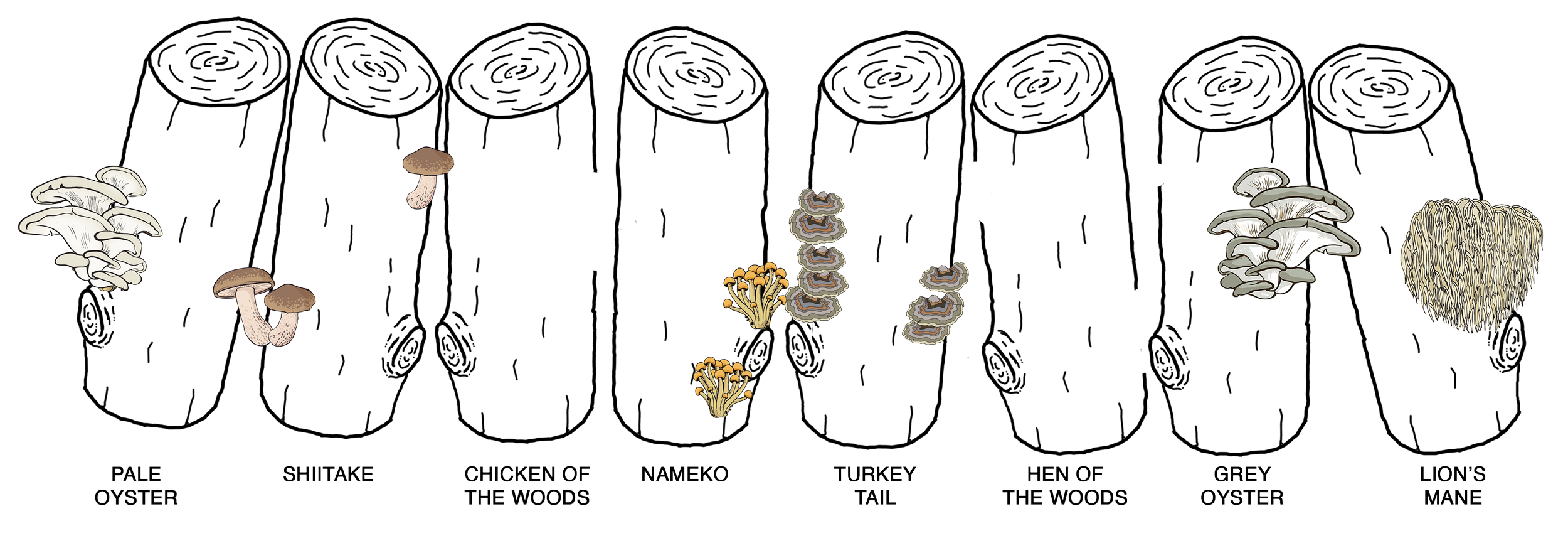
To get the best out of your out door mushroom growing kit, you’ll have to carefully select you the perfect log - hardwood logs are the preferred wood, but fruit trees will also feed your mushrooms for several years.
We have dawn up a table below and added to below to help you source the best log for your mushrooms.
You’ll require a freshly felled log, from a healthy tree with its bark still intact. We recommend you avoid soft woods, yew trees and conifers.
Your log will need to still be ‘green’ and have been cut within the last 6-8 weeks. Any longer and there is a risk your log may have been contaminated with another type of fungus already.
What’s inside your grow at home kit:
Timber dowels in a vented grow bag.
A sponge dabber for wax application.
Soy or Bees wax
Keep in a cool place until opening, ideally below 10° or at the back of the fridge is a great place to store. Open within 1 month of purchase.
You will need:
- A Log - up to 50cm length, and from 10cm - 20cm in diameter.
Must be fresh and felled with in the last 6-8 weeks, with no signs of damage or other fungal growth.
- A pen or tape to make a mark on your drill bit, the depth of your dowels, to ensure evenly drilled holes.
- A hammer.
- A drill with a hammer drill function - if your drill is not very powerful it may struggle to make the holes in hardwood.
- 8.5mm clean drill bit.
Once you’ve inoculated your log, it should be placed somewhere outside where it will be sheltered from harsh weathers both wind and sunshine.
Your log will enjoy being rained on regularly and needs to be located near a water source so it can be watered at least once a week. If your log dries out, the mycelium is likely to perish, and your log will not fruit.
Common questions:
What’s the best log to use? We recommend a hard wood log. You can see the list of tree in the table below.
When will my log fruit? You can expect your log to fruit 12 - 18 months following inoculation, and for 3+ years depending on the size of your log and the type of tree it is from.
If growing Shiitake mushrooms, these can be forced to fruit once it’s fully colonised, through a process called shocking. To do this drop your logs firmly but without causing damage and then soak them in cold water for 24 hours.
Can I store my log inside? You can store your log inside; it must be kept away from any heat sources and out of direct sunlight. You’ll need to still water your log regularly to prevent it from drying out, do not sit your log in water or in a damp space - this is to avoid your log rotting.
Can I grow mushrooms on my Christmas tree? Nameko mushrooms growing on fir trees can be stored under a layer of leaf mulch for the first year. They’ll fruit after a frost or snowfall, so keep an eye out for your winter harvest of mushrooms.
What mushrooms you to grow:
-
Beautiful and delicious.
Their bold grey colour softens when cooked, but their rich, savoury flavour remains. Fast-growing and highly productive, perfect for beginners and confident growers alike.☆ ☆ ☆ – Easy to grow with a good yield. Thrives in warmer environments. Anticipated generous crop size. Check the table below for the best logs to source.
-
Beautiful and delicious native variety.
Just as striking and flavourful as the standard grey oyster, with excellent performance in warmer growing conditions.☆ ☆ – Easy to grow with a good yield. Enjoys warmer environments. Anticipated moderate-to-good crop size. Check the table below for the best logs to source.
-
Strong, deep umami flavours with stunning brown caps and pale gills.
A kitchen classic prized for its rich taste and firm texture. Shiitake mushrooms elevate everything from broths to stir-fries and roasts.☆ ☆ ☆ – Easy to grow with a good, steady yield. Can be forced to fruit throughout the year. Check the table below for the best logs to source.
-
Soft but dense texture with a mild, sweet flavour.
Prized for both its culinary versatility and wellbeing benefits, Lion’s Mane produces striking white, shaggy fruits that resemble a cascading mane. Perfect for slicing into “steaks,” stir-fries, or plant-based “crab” dishes.☆ ☆ ☆ – Easy to grow with a steady, reliable yield. Can be forced to fruit throughout the year. Check the table below for the best logs to source.
-
Soft, cascading “mane” with mild, sweet seafood-like flavour.
This native variety offers the same culinary and wellness benefits as traditional Lion’s Mane, with a slightly slower growth habit and a connection to local ecosystems. Perfect for slicing into “steaks” or incorporating into soups and stir-fries.☆ ☆ – Easy to grow with moderate yields. Fruiting can be encouraged in different seasons with proper care. Check the table below for the best logs to source.
-
Earthy, woody flavour with beautiful natural patterning.
Best known for its medicinal properties, Turkey Tail produces vibrant, fan-shaped brackets in bands of browns, greys, and creams. Ideal for teas, tinctures, and extracts.☆ ☆ – Easy to grow with moderate yields. A slower grower, but highly rewarding. Check the table below for the best logs to source.
-
Bold, meaty texture with a mild lemony note.
A true showstopper, producing bright orange and yellow clusters that pull apart just like chicken. Excellent grilled, roasted, or used in hearty dishes.☆ ☆ – More challenging to establish, but produces dramatic and generous harvests when successful. Check the table below for the best logs to source.
-
Delicate, nutty flavour with a slightly gelatinous texture.
Nameko is prized in Japanese cuisine for soups, stir-fries, and miso dishes. Its small, amber-brown caps glisten when cooked, adding both flavour and a beautiful glossy appearance to meals.☆ ☆ ☆ – Easy to grow with a reliable, steady yield. Fruiting throughout the year is possible under the right conditions - prefers the cold. Check the table below for the best logs to source.
-
Delicate, sweet, and slightly nutty flavour with an interesting coral-like texture.
A beautiful native variety, perfect for adding visual interest to dishes or enjoying simply sautéed.☆ ☆ – Easy to grow with a good yield. Thrives in cooler environments. Anticipated moderate-to-good crop size.
-
Earthy, mild flavour with a tender, velvety texture.
This native mushroom produces striking clusters, adding both flavour and visual appeal to your culinary creations.☆ ☆ – Easy to grow with a good yield.
Enjoys warmer environments. Anticipated moderate-to-good crop size.
-
Rich, savory flavour with asubtle tarragon notes in both aroma and taste - honestly!
A striking native variety with bold, attractive caps. Perfect for stir-fries, soups, and as a standout garnish.☆ ☆ – Easy to grow with a good yield. Thrives in warmer environments. Anticipated moderate-to-good crop size.
Tree recommendations:

For other mushrooms and wood suggestions see Gourmet Woodland Mushrooms or North Spore.
Ⓒ Caley Brothers 2025